
How did this summer’s drought affect the potato crop? Marcus travelled to Lincolnshire with chef Pierre Koffmann to find out …
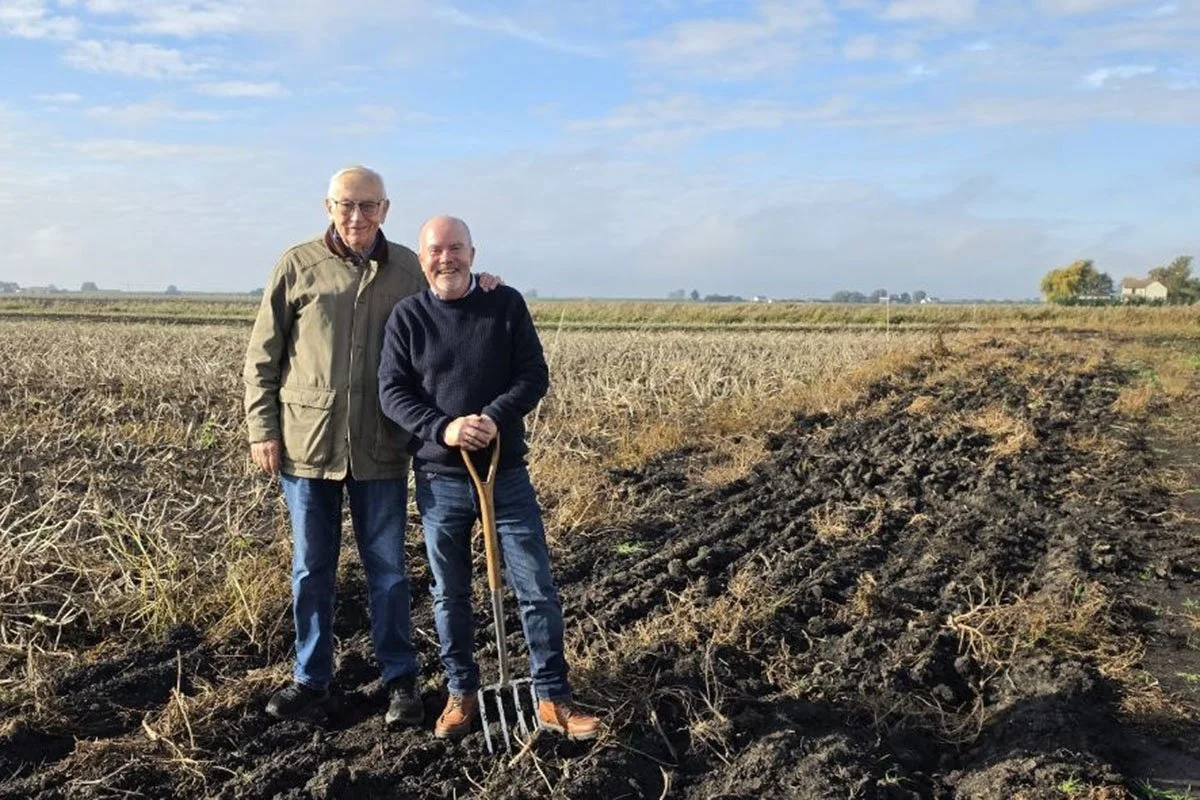
From left: chef Pierre Koffmann and Marcus Rowlerson
Michelin-starred chef Pierre Koffmann left the professional kitchen some years ago.
One of his current projects is ‘Koffmann’s’, a potato brand and ‘Food Heroes’ product, which he runs with his wife Claire and her brother Simon.
Marcus travelled to Lincolnshire with the couple to find out more. “I’ve been in the fruit and veg business for more than forty years,” Marcus explains. “And on this trip I learned more about this ingredient in 30 minutes.”
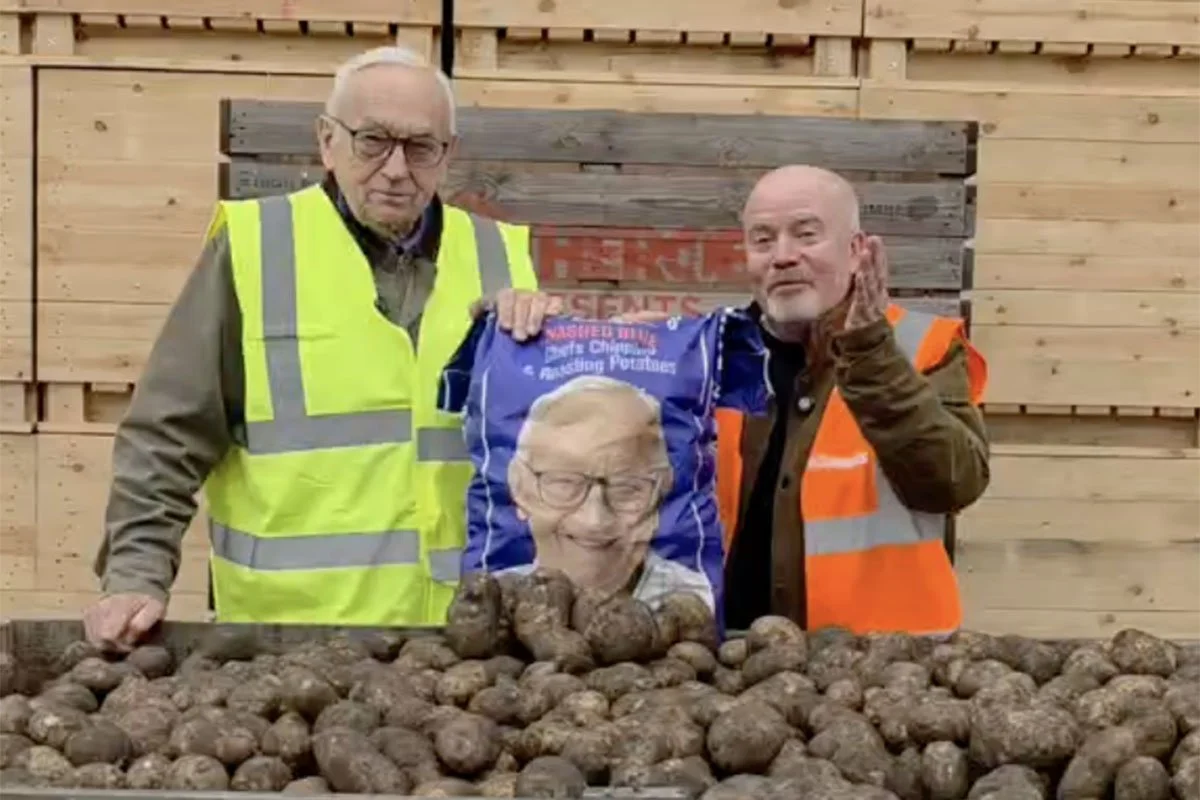
Koffmann’s works with a network of potato growers and is renowned for their meticulous approach to quality and grading. In their test kitchen, chefs will trial each variety at various points throughout the year.
Did You Know?
Pierre and Claire Koffmann met either side of a potato harvester. Claire’s family have been involved in potato farming for many years.
Thankfully, the growers in Lincolnshire report that the potato harvest this year has not been as seriously affected by last summer’s drought as was initially feared. A key reason is that this county is not so short of water as many others. Yields are slightly down on the precious year.
Chefs - do not rigidly insist on your favourite potato varieties. The variety of the potato that you use is, in fact, far less important than you might think to the quality of the dish. The secret of Koffmann’s success is packing the right variety of potato at the right time of year. A ‘Sagitta’, for example, may perform best in November; a ‘Markies’ is superior in January.
Potatoes must ideally be stored at 8°C - not the fridge! “Within 24 hours at 2 or 3°C you will have lost what was special about that potato,” explains Marcus.
Once you peel a potato, you are effectively killing what was a living tuber - it will deteriorate quickly after that. Prep potatoes at the last moment.
A new potato is only a ‘true’ new potato when it is has been harvested when the plant is still alive above it, rather than cut and died back. This is when the skin is not set and still scrapable.
Potatoes are an intensive crop. Most farms leave a field for five years before planting them again; at Koffmann’s the average is eight years.
“It was a truly great trip - a lot of fun,” enthuses Marcus. “They really do know what they are talking about.”